| Proto-Nnadū |
|---|
| Pronunciation |
/nnədɨː/ |
|---|
| Region |
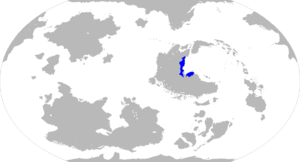
Seforma |
|---|
Language family |
|
|---|
 |
Agglutinative with inflectional and isolative features.
Phonology
Consonants
|
|
Bilabial
|
Alveolar
|
Palatal
|
Bilabialized palatal
|
Velar
|
Bilabialized velar
|
| Nasal
|
m
|
n
|
ɲ
|
|
ŋ
|
|
| Tenuis plosive
|
p
|
t
|
c
|
cᵝ
|
k
|
kᵝ
|
| Ejective plosive
|
pʼ
|
tʼ
|
cʼ
|
cʼᵝ
|
kʼ
|
kʼᵝ
|
| Voiced plosive
|
b
|
d
|
ɟ
|
ɟᵝ
|
g
|
gᵝ
|
| Implosive
|
ɓ
|
ɗ
|
ʄ
|
ʄᵝ
|
ɠ
|
ɠᵝ
|
| Fricative
|
|
s
|
|
|
x
|
xᵝ
|
| Ejective fricative
|
|
sʼ
|
|
|
|
|
| Lateral approximant
|
|
l
|
ʎ
|
|
ʟ
|
|
| Approximant
|
β̞
|
|
j
|
|
|
|
[p t c cᵝ k kᵝ] /p t c cw k kw/
[pʼ tʼ cʼ cʼᵝ kʼ] kʼᵝ /p̕ t̕ c̕ cw̕ k̕ kw̕/
[b d ɟ ɟᵝ g gᵝ] /b d ġ ġw g gw/
[ɓ ɗ ʄ ʄᵝ ɠ ɠᵝ] /b̕ d̕ ġ̕ ġw̕ g̕ gw̕/
[s sʼ x xᵝ] /s s̕ h hw/
[m n ɲ ŋ] /m n ṇ ŋ/
[l ʎ ʟ] /l ḷ ł/
[j β̝] /j w/
Vowels
a - tenuis short vowel
ã - nasalized short vowel
a̤ - breathy short vowel
aː - long vowel
|
|
Front
|
Central
|
Back
|
| Short
|
Long
|
Short
|
Long
|
Short
|
Long
|
| Close
|
|
iː ĩː i̤ː
|
|
ɨː ɨ̃ː ɨ̤ː
|
|
uː ũː ṳː
|
| Near-close
|
|
|
ɪ̈ ɪ̃̈ ɪ̤̈
|
|
ʊ ʊ̃ ʊ̤
|
|
| Close-mid
|
e ẽ e̤
|
|
|
|
|
|
| Mid
|
|
|
ə ə̃ ə̤
|
|
|
|
| Open
|
|
|
|
aː ãː a̤ː
|
|
|
[iː ĩː i̤ː] /ii įį ịị/
[ɨː ɨ̃ː ɨ̤ː] /uu ųų ụụ/
[uː ũː ṳː] /oo ǫǫ ọọ/
[ɪ̈ ɪ̃̈ ɪ̤̈] /u ų ụ/
[ʊ ʊ̃ ʊ̤] /o ǫ ọ/
[e ẽ e̤] /i į ị/
[ə ə̃ ə̤] /a ą ạ/
[aː ãː a̤ː] /aa ąą ạạ/
Phonotactics
(C)(C)V(R)(C)
Accent
Grammaticalized tonal pitch accent. Three stress-tones: rising (I), falling (II), rising-falling (III).
- I - noun/verb stress (á : aá)
- II - adjectival/participial stress (à : aà)
- III - adverbial stress (â : aâ)
- Nouns, nominal adjectives, non-deverbal adverbs - first syllable stress
- Verbs, participles (with deverbal adverbs) - last syllable stress
Nouns
- tripartite and three-way patient alignment
- possessor (preffixal).
Morphemic order:
[Definiteness] + [Case + Possessor + Root + Root extension + (Gender + Number) + Tense]
Gender and number
|
|
Human
|
Non-Human
|
| Singular
|
-ǫh
|
gwụłǫh
|
man
|
-
|
kųųł
|
wolf
|
| Dual
|
-ǫsa
|
gwụłǫsa
|
two men
|
-ii
|
kųųłii
|
two wolves
|
| Plural
|
-
|
gwụł
|
men
|
-ii
|
kųųłii
|
wolves
|
Declension
| Intransitive
|
subject of intransitive clauses
|
-
|
kųųł
|
wolf
|
| Ergative
|
agent of transitive or donor of ditransitive clauses
|
nį-
|
nįkųųł
|
| Accusative
|
object of transitive clauses
|
lạ-
|
lạkųųł
|
| Causal
|
agent of causative clauses
|
sǫ-
|
sǫkųųł
|
by wolf, because of wolf
|
| Instrumental
|
instrument, tool, accompaniament or theme of ditransitive clauses
|
hwaa-
|
hwaakųųł
|
with wolf
|
| Dative
|
goal, location or recipient of ditransitive clauses
|
mu-
|
mukųųł
|
to / for wolf
|
Definiteness
| Neutral
|
-
|
ġwąąḷǫh
|
woman
|
| Indefinite
|
ạm
|
ạm ġwąąḷǫh
|
a woman
|
| Definite proper
|
ąs
|
ąs ġwąąḷǫh
|
the woman
|
| Definite distant
|
ooł
|
ooł ġwąąḷǫh
|
yonder woman
|
Nominal tense
Tense is obligatory marked on subject or object of sentence (depending on subject marking).
| Non-past
|
-
|
b̕ịịnǫh
|
male man
|
| Past
|
-o
|
b̕ịịnǫho
|
male man (in past action or situation)
|
Possessor
|
|
Human
|
Non-Human
|
| Singular
|
Dual
|
Plural
|
Singular
|
Dual
|
Plural
|
| 1.
|
-ąąh (← aanǫh)
|
my
|
-ǫǫsa (← aanǫsa)
|
of both us
|
-aan (← aan)
|
of all us
|
-
|
| 2.
|
-ǫkw̕ (← kw̕ǫǫh)
|
thy
|
-kw̕ǫǫs (← kw̕ǫǫsa)
|
of you both
|
-ǫkw̕ (← kw̕ǫ)
|
of you all
|
-ǫcw̕ (← cw̕ǫ)
|
thy
|
-ǫcw̕įį (← cw̕ǫii)
|
of you both
|
-ǫcw̕įį (← cw̕ǫii)
|
of you all
|
| 3.
|
-tǫǫh (← tạạǫh)
|
his / her
|
-tǫǫs (← tạạǫsa)
|
of they both
|
-tạạ (← tạạ)
|
of they all
|
-sạạ (← sạạ)
|
it
|
-sịị (← sạạii)
|
of they both
|
-sịị (← sạạii)
|
of they all
|
Verbs
- pronominal persons before verb.
- subjective persons cliticized to objectives.
Morphemic order:
[Object + Subject] + [Evidentiality] + [Polarity + Mood + Root + Root extension + Voice + Aspect + (Gender + Number)]
Aspect
| Imperfective
|
-
|
p̕ǫǫkọ-
|
to speak
|
| Iterative
|
-waaw-
|
p̕ǫǫkọwaaw-
|
to speak many times
|
| Perfective
|
-ạd-
|
p̕ǫǫkọạd-
|
to say
|
Voice
| Active
|
-
|
paat̕-
|
to see
|
| Passive
|
-il-
|
paat̕il-
|
to be seen
|
| Medial
|
-ųs̕-
|
paat̕ųs̕-
|
to see self
|
Mood
| Indicative
|
-
|
d̕ii-
|
to go
|
| Conditional
|
-ną
|
d̕iiną
|
... would go
|
| Jussive
|
-lạạ
|
d̕iilạạ
|
... should go
|
Polarity
| Affirmative
|
-
|
k̕ụụ-
|
to stand
|
| Negative
|
ą-
|
ąk̕ụụ-
|
don't to stand
|
Evidentiality
| Visual
|
-
|
p̕aap-
|
to beat (and it is visible)
|
| Non-visual
|
nịŋ
|
nịŋ p̕aap-
|
to beat (and it is not seen, but known from other source)
|
| Reported
|
łọọ
|
łọọ p̕aap-
|
to beat (and it is non-confirmed information from another hand)
|
| Assumed
|
hạj
|
hạj pʼaap-
|
to beat (and it is deducted from a traces)
|
Gender and number
|
|
Human
|
Non-Human
|
| Singular
|
-ǫh
|
k̕uŋǫh
|
to make (by human)
|
-
|
k̕uŋ
|
to make (by something other)
|
| Dual
|
-ǫsa
|
k̕uŋǫsa
|
to make (by two humans)
|
-ii
|
k̕uŋii
|
to make (by two non-humans)
|
| Plural
|
-
|
k̕uŋ
|
to make (by a humans)
|
-ii
|
k̕uŋii
|
to make (by more than two non-humans)
|
Non-finite verbs
| Action noun
|
-nuu
|
paat̕nuu
|
vision, seeing
|
| Participles
|
| Adjectival
|
pa
|
pa paàt̕
|
seeing
|
| Adverbial
|
pa paât
|
seeing
|
Adjective and adverb
Degrees of comparison
| Positive
|
Comparative
|
Superlative
|
| -
|
pąą
|
stạạ
|
| tkw̕ạ̀
|
tkw̕ạ̀ pąą
|
tkw̕ạ̀ stạạ
|
| good
|
better
|
best
|
Adverbs
Degrees of comparison
| Positive
|
Comparative
|
Superlative
|
| -
|
pąą
|
stạạ
|
| tkw̕ậ hụ
|
tkw̕ậ hụ pąą
|
tkw̕ậ hụ stạạ
|
| well
|
better
|
best
|
Numerals
Cardinal numerals
| 1.
|
ǫtạạ
|
| 2.
|
tkųųs
|
| 3.
|
p̕k̕ụụḷi
|
| 4.
|
kłaasọ
|
| 5.
|
s̕oŋkoo
|
| 6.
|
s̕oŋkoo ǫtạạ
|
| 7.
|
s̕oŋkoo tkųųs
|
| 8.
|
s̕oŋkoo p̕k̕ụụḷi
|
| 9.
|
s̕oŋkoo kłaasọ
|
| 10.
|
b̕isaal
|
| 11.
|
b̕isaal ǫtạạ
|
| 12.
|
b̕isaal tkųųs
|
| 15.
|
p̕k̕ụụḷi s̕oŋkoo
|
| 20.
|
tkųųs b̕isaal
|
| 21.
|
tkųųs b̕isaal ǫtạạ
|
| 30.
|
tkųųs p̕k̕ụụḷi s̕oŋkoo / p̕k̕ụụḷi b̕isaal
|
| 100.
|
b̕isaal b̕isaal
|
Derived numerals
|
|
Ordinal
|
Multiplicative
|
Reproductive
|
Distributive
|
Fractional
|
| -jo
|
-s̕iim
|
-muuł
|
-ṇaaŋ
|
-tlįk
|
| 1.
|
ǫtạạjo
|
ǫtạạs̕iim
|
ǫtạạmuuł
|
ǫtạạṇaaŋ
|
ǫtạạtlįk
|
| 2.
|
tkųųsjo
|
tkųųss̕iim
|
tkųųsmuuł
|
tkųųsṇaaŋ
|
tkųųstlįk
|
| 3.
|
p̕k̕ụụḷijo
|
p̕k̕ụụḷis̕iim
|
p̕k̕ụụḷimuuł
|
p̕k̕ụụḷiṇaaŋ
|
p̕k̕ụụḷitlįk
|
| 4.
|
kłaasọjo
|
kłaasọs̕iim
|
kłaasọmuuł
|
kłaasọṇaaŋ
|
kłaasọtlįk
|
| 5.
|
s̕oŋkoojo
|
s̕oŋkoos̕iim
|
s̕oŋkoomuuł
|
s̕oŋkooṇaaŋ
|
s̕oŋkootlįk
|
| 6.
|
s̕oŋkoo-ǫtạạjo
|
s̕oŋkoo-ǫtạạs̕iim
|
s̕oŋkoo-ǫtạạmuuł
|
s̕oŋkoo-ǫtạạṇaaŋ
|
s̕oŋkoo-ǫtạạtlįk
|
| 7.
|
s̕oŋkoo-tkųųsjo
|
s̕oŋkoo-tkųųss̕iim
|
s̕oŋkoo-tkųųsmuuł
|
s̕oŋkoo-tkųųsṇaaŋ
|
s̕oŋkoo-tkųųstlįk
|
| 8.
|
s̕oŋkoo-p̕k̕ụụḷijo
|
s̕oŋkoo-p̕k̕ụụḷis̕iim
|
s̕oŋkoo-p̕k̕ụụḷimuuł
|
s̕oŋkoo-p̕k̕ụụḷiṇaaŋ
|
s̕oŋkoo-p̕k̕ụụḷitlįk
|
| 9.
|
s̕oŋkoo-kłaasọjo
|
s̕oŋkoo-kłaasọs̕iim
|
s̕oŋkoo-kłaasọmuuł
|
s̕oŋkoo-kłaasọṇaaŋ
|
s̕oŋkoo-kłaasọtlįk
|
| 10.
|
b̕isaaljo
|
b̕isaals̕iim
|
b̕isaalmuuł
|
b̕isaalṇaaŋ
|
b̕isaaltlįk
|
| 11.
|
b̕isaal-ǫtạạjo
|
b̕isaal-ǫtạạs̕iim
|
b̕isaal-ǫtạạmuuł
|
b̕isaal-ǫtạạṇaaŋ
|
b̕isaal-ǫtạạtlįk
|
| 11.
|
b̕isaal-tkųųsjo
|
b̕isaal-tkųųss̕iim
|
b̕isaal-tkųųsmuuł
|
b̕isaal-tkųųsṇaaŋ
|
b̕isaal-tkųųstlįk
|
| 15.
|
p̕k̕ụụḷi-s̕oŋkoojo
|
p̕k̕ụụḷi-s̕oŋkoos̕iim
|
p̕k̕ụụḷi-s̕oŋkoomuuł
|
p̕k̕ụụḷi-s̕oŋkooṇaaŋ
|
p̕k̕ụụḷi-s̕oŋkootlįk
|
| 20.
|
tkųųs-b̕isaaljo
|
tkųųs-b̕isaals̕iim
|
tkųųs-b̕isaalmuuł
|
tkųųs-b̕isaalṇaaŋ
|
tkųųs-b̕isaaltlįk
|
| 21.
|
tkųųs-b̕isaal-ǫtạạjo
|
tkųųs-b̕isaal-ǫtạạs̕iim
|
tkųųs-b̕isaal-ǫtạạmuuł
|
tkųųs-b̕isaal-ǫtạạṇaaŋ
|
tkųųs-b̕isaal-ǫtạạtlįk
|
| 30.
|
tkųųs-p̕k̕ụụḷi-s̕oŋkoojo
|
tkųųs-p̕k̕ụụḷi-s̕oŋkoos̕iim
|
tkųųs-p̕k̕ụụḷi-s̕oŋkoomuuł
|
tkųųs-p̕k̕ụụḷi-s̕oŋkooṇaaŋ
|
tkųųs-p̕k̕ụụḷi-s̕oŋkootlįk
|
| 100.
|
b̕isaal-b̕isaaljo
|
b̕isaal-b̕isaals̕iim
|
b̕isaal-b̕isaalmuuł
|
b̕isaal-b̕isaalṇaaŋ
|
b̕isaal-b̕isaaltlįk
|
Pronouns
- tense marker
- gender stems with number cliticization.
Personal pronouns
Objective personal pronouns are pre-cliticized to subjectives.
Objectives
Objectives of the 1.-2. persons have their own stems.
|
|
Human
|
Non-Human
|
| Singular
|
Dual
|
Plural
|
Singular
|
Dual
|
Plural
|
| 1.
|
lǫh
|
me
|
lǫǫs
|
us both
|
la
|
us all
|
-
|
| 2.
|
jǫh
|
thee
|
jǫǫs
|
two
|
ja
|
we all
|
hwǫh
|
thou
|
hwǫǫs
|
we two
|
hwa
|
we all
|
| 3.
|
tạǫǫh
|
he / she
|
tạǫǫs
|
they two
|
tạ
|
they all
|
sạ
|
it
|
sạii
|
they two
|
sạii
|
they all
|
Subjectives
|
|
Human
|
Non-Human
|
| Singular
|
Dual
|
Plural
|
Singular
|
Dual
|
Plural
|
| 1.
|
aanǫh
|
I
|
aanǫsa
|
we two
|
aan
|
we all
|
-
|
| 2.
|
kw̕ǫǫh
|
thou
|
kw̕ǫǫsa
|
you both
|
kw̕ǫ
|
you all
|
cw̕ǫ
|
thou
|
cw̕ǫii
|
you both
|
cw̕ǫii
|
you all
|
| 3.
|
tạạǫh
|
he / she
|
tạạǫsa
|
they two
|
tạạ
|
they all
|
sạạ
|
it
|
sạạii
|
they two
|
sạạii
|
they all
|
Demonstrative pronouns
|
|
Definite proper
|
Definite distant
|
Indefinite
|
| Person
|
ąs
|
this
|
ooł
|
that
|
ạm
|
someone
|
| Non-Human
|
ąs
|
this
|
ooł
|
that
|
ạm
|
something
|
| Place
|
ąspaad̕
|
here
|
oołpaad̕
|
there
|
ạmpaad̕
|
somewhere
|
| Source
|
hụnąspaad̕
|
from here
|
hụnoołpaad̕
|
from there
|
hụnạmpaad̕
|
from somewhere
|
| Purpose direction
|
koąspaad̕
|
to here
|
koołpaad̕
|
to there, so far
|
koạmpaad̕
|
to somewhere
|
| Path
|
ąsg̕uła
|
this way
|
oołg̕uła
|
that way
|
ạmg̕uła
|
some way
|
| Time
|
ąscạạł
|
now
|
oołcạạł
|
then
|
| Method
|
ąsḷịị
|
in this way
|
oołḷịị
|
in that way
|
ạmḷịị
|
in some way
|
| Quantity
|
ąsg̕łaa
|
so much
|
| Qualify
|
ḷiiąs
|
like this here
|
ḷiiooł
|
like that
|
ḷiiạm
|
like something
|
| Reason
|
ąspạạ
|
for this reason
|
oołpạạ
|
for that reason
|
ạmpạạ
|
for some reason
|
Interrogative, relative, indefinite and unlimited pronouns
|
|
Interrogative / Relative
|
Indefinite
|
Unlimited
|
| Person
|
tii
|
who ? which ?
|
tiiha
|
someone
|
tiisa
|
anyone
|
| Non-Human
|
pạạ
|
what ? which ?
|
pạạha
|
something
|
pạạsa
|
anything
|
| Place
|
magwi
|
where ?
|
magwiha
|
somewhere
|
magwisa
|
anywhere
|
| Source
|
hụnmagwi
|
whence ?
|
hụnmagwiha
|
from somewhere
|
hụnmagwisa
|
from anywhere
|
| Purpose direction
|
komagwi
|
whither ?
|
komagwiha
|
to somewhere
|
komagwisa
|
to anywhere
|
| Path
|
ḷịg̕uła
|
which way ?
|
ḷịg̕ułaha
|
via some way
|
ḷịg̕ułasa
|
via any way
|
| Time
|
ḷịcạạł
|
when ?
|
ḷịcạạłha
|
once
|
ḷịcạạłsa
|
ever
|
| Method
|
ḷịị
|
how ?
|
ḷịịha
|
somehow
|
ḷịịsa
|
anyhow
|
| Quantity
|
ḷịg̕łaa
|
how much ?
|
ḷịg̕łaaha
|
somehow much
|
ḷịg̕łaasa
|
anyhow much
|
| Qualify
|
ḷịtii
|
which one ?
|
kaa
|
some
|
kwąą
|
any
|
| Reason
|
kopạạ
|
why ?
|
Negative, universal and alternative pronouns
|
|
Negative
|
Universal
|
Alternative
|
| Person
|
ątii
|
nobody
|
maatii
|
every
|
hwịtiisa
|
anyone else
|
| Non-Human
|
ąpạạ
|
nothing
|
maapạạ
|
every, all
|
hwịpạạsa
|
anything else
|
| Place
|
ąmagwi
|
nowhere
|
maamagwi
|
everywhere
|
hwịmagwisa
|
elswhere
|
| Source
|
hụnąmagwi
|
from nowhere
|
hụnmaamagwi
|
from everywhere
|
hụnmagwisa
|
from elswhere
|
| Purpose direction
|
koąmagwi
|
to nowhere
|
komaamagwi
|
to everywhere
|
komagwisa
|
to elswhere
|
| Path
|
ąg̕uła
|
through no way
|
maag̕uła
|
through all ways
|
g̕ułasa
|
which way else
|
| Time
|
ącạạł
|
never
|
maacạạł
|
always
|
cạạłsa
|
when else
|
| Method
|
ąị
|
nohow
|
maaị
|
in all methods
|
ịsa
|
otherwise
|
| Quantity
|
ąg̕łaa
|
nothing
|
maag̕łaa
|
otherwise than so many
|
| Quality
|
ąsụk̕
|
neuter, indistinct
|
maasụk̕
|
any
|
sụk̕sa
|
other
|
Numeral pronouns
| Interrogative / Relative
|
ḷịg̕łaa
|
how much ?
|
| Indefinite
|
ḷịg̕łaaha
|
write a number
|
| Unlimited
|
ḷịg̕łaasa
|
however many
|
| Negative
|
ąg̕łaa
|
nothing
|
| Alternative
|
maag̕łaa
|
otherwise than so many
|
Reflexive, reciprocal and cooperative pronouns
| Reflexive
|
cų
|
oneself
|
| Reciprocal
|
tkųųc (← tkųųs-cu)
|
each other
|
| Cooperative
|
cilt̕ạ (← cil-t̕ạ)
|
together cooperatively
|
Prepositions
Spatials, ablatival and allatival directionals
| ạs̕
|
in, inside
|
Instrumental
|
| from inside
|
Accusative
|
| to inside
|
Dative
|
|
|
| ṇį
|
on
|
Instrumental
|
| from on
|
Accusative
|
| to on
|
Dative
|
|
|
| t̕aab
|
above
|
Instrumental
|
| from above
|
Accusative
|
| to above
|
Dative
|
|
|
| d̕ọọm
|
under
|
Instrumental
|
| from under
|
Accusative
|
| to under
|
Dative
|
|
|
| kịṇ
|
beside
|
Instrumental
|
| from beside
|
Accusative
|
| to beside
|
Dative
|
|
|
| gwǫǫk̕
|
away
|
Instrumental
|
| from away
|
Accusative
|
| to away
|
Dative
|
|
|
| ạs̕tkųųs
|
between
|
Instrumental
|
| from between
|
Accusative
|
| to between
|
Dative
|
|
|
| htaa
|
behind
|
Instrumental
|
| from behind
|
Accusative
|
| to behind
|
Dative
|
|
|
| wạạ
|
out
|
Instrumental
|
| from out
|
Accusative
|
| to out
|
Dative
|
|
|
| hwąąk
|
around
|
Instrumental
|
| from around
|
Accusative
|
| to around
|
Dative
|
|
|
| psaaw
|
before, opposite to
|
Instrumental
|
| from before, from opposite to
|
Accusative
|
| to before, to opposite to
|
Dative
|
|
|
| ạs̕cạạł
|
during, in time of
|
Instrumental
|
| from time of
|
Accusative
|
| to time of
|
Dative
|
|
|
| ġwi
|
after
|
Instrumental
|
| from after
|
Accusative
|
| to after
|
Dative
|
Other prepositions
| Companion, attributive object
|
cil
|
with
|
Instrumental
|
| Origin
|
hụn
|
from
|
Accusative
|
| Lack
|
uus
|
without
|
Accusative
|
| Alternative
|
ạspaad̕
|
instead
|
Accusative
|
| Contrary
|
ạspsaaw
|
against
|
Dative
|
| Resistance
|
ałą
|
despite, though
|
Accusative
|
| Stylization
|
ṇįġ̕is̕
|
along to, according to
|
Dative
|
Particles
Conjunctions
| Paratactical conjunctions
|
| Copulative
|
t̕ạ
|
and
|
| Conjunctive
|
hụt̕
|
also
|
| Disjunctive
|
jạ
|
or
|
| Contrastive, exceptional
|
ḷǫǫ
|
but
|
| Consequentive
|
ŋọọ
|
so
|
| Comparative
|
łuuŋ
|
than
|
|
|
| Hypotactical conjunctions
|
| kwį
|
to, for
|
| głoo
|
althought
|
| ŋkiin
|
because
|
| p̕ịị
|
if
|
| knah
|
that, providing
|
Modifiers
| Restrictive
|
hwǫt
|
only
|
| Additive
|
ạhcị
|
yet
|
Polarity particles
| Affirmative
|
bạ
|
yes
|
| Negative
|
ąą
|
no
|
Word formation
Compounding
Derivation
Noun
Noun to noun
| Diminutive
|
-ṇii
|
dlạạhwįǫh → dlạạhwįṇiiǫh
|
daughter → little daughter
|
| Augmentative
|
-b̕ạạ
|
waaguu → waaguub̕ạạ
|
mountain → grand mountain
|
| Contradiction
|
ą-
|
gwụłǫh → ągwụłǫh
|
human → non-human
|
| Similarity
|
nsup̕-
|
buŋką → nsupbuŋką
|
tree → pseudo-tree
|
| Half
|
t̕ạạl-
|
sk̕ųųla → t̕ạạlsk̕ųųla
|
dog → half-dog
|
| Relational abstract
|
-łoos̕
|
bạạc̕ǫh → bạạc̕łoos̕
|
brother → brotherhood
|
| Related person
|
-įk
|
gʷọọma → gʷọọmaįk
|
cow → cowman
|
| Collective
|
-ạt
|
p̕ạp̕įk → p̕ạp̕įkạt
|
bird → birds (a a collective)
|
| Place
|
-mooḷ
|
t̕uk̕ → t̕uk̕mooḷ
|
fire → campfire
|
| Art / Craft
|
-hmaada
|
koomb̕ṇi → koombṇihmaada
|
war → craft of war
|
| Knowledge
|
-jọọġ
|
cḷąąh → cḷąąhjọọġ
|
herb → herbalism
|
| Expert
|
-jọọġįk
|
cḷąąhjọọġ → cḷąąhjọọġįk
|
herbalism → herbalist
|
Noun to adjective
| Possessive
|
-tiiŋ
|
gwụłǫh → gwụłtiiŋǫh
|
man → human
|
| Originative
|
-hụn
|
ŋgwoom → ŋgwoomhụn
|
sky → celestial
|
| Similaritive
|
-taat
|
hpooj → hpoojtaat
|
cat → felid
|
| Feature
|
-maaṇ
|
ḷiic → ḷiicmaaṇ
|
hair → hairy
|
| Affiliative
|
-jon
|
mnịịgw̕ǫh → mnịịgw̕jonǫh
|
family → familiar
|
| Privative
|
ą-...-tiiŋ
|
g̕iṇc → ąg̕iṇctiiŋ
|
tooth → toothless
|
Verb
Verb to noun
| Agentive
|
-ąk
|
sooh- → soohąk
|
(to) shoot → shooter
|
| Experiencer, adressee
|
-nuu
|
d̕jaał-- → d̕jaałnuu
|
(to) teach → learner
|
| Result
|
-saah
|
kad̕-- → kad̕saah
|
(to) fall → (a) fall
|
| Instance
|
-ṇi
|
p̕ǫǫkọ- → p̕ǫǫkọṇi
|
(to) speak → speech
|
| Instrument
|
-k̕oḷ
|
p̕aap- → p̕aapk̕oḷ
|
(to) beat → whip
|
| Place
|
-mooḷ
|
dag- → dagmooḷ
|
(to) kill → slaughterhouse
|
Verb to verb
Adjective
Adjective to noun
| Abstract
|
-jaas
|
bọọŋ → bọọŋjaas
|
strong → strength
|
Adjective to adjective
| Tendency
|
-liis
|
tkw̕â → tkwâliis
|
good → bland
|
| Intensification
|
-skaa
|
mbaâs → mbaâsskaa
|
big → very big
|
| Excess
|
-pi
|
cwį̂t → cwį̂tpi
|
small → too small
|
Syntax
Word order
- OSV (Object - Subject - Verb)
Copular verbs
| Translative
|
nukoh
|
became
|
| Essive
|
nu
|
be
|
| Excessive
|
nugạt̕
|
cease to be
|
See Also


